

Where does artificial intelligence stand – and how does it benefit your company?
Building blocks for an AI strategy in corporate communications
… under this title, we recently wrote a three-part series of feature articles for the PR-Journal. We — in this case — are my valued colleague Christina Wöhlke from Wordinc, who share the office space with us on Hongkonstraße, and I, Tilo Timmermann, co-founder and managing director of TDUB.
In retrospect, it is astonishing how explosively the topic of “AI in communication” has developed – in principle we should never have stopped working on the articles and continuously adding to them. After the initial amazement at the capabilities of the new tools, concerns about ChatGPT’s widespread “hallucinations” quickly arose. Now ethical and philosophical implications are increasingly being discussed – right up to the appeal by many AI luminaries and developers who warn of the imminent extinction of humanity.
At the moment, the future role of artificial intelligence is also leaving no one in the communications industry unmoved. Everyone is experimenting and is probably equally alternately as enthusiastic as they are concerned. When producing long, specialised texts, the quality repeatedly leads to disillusionment – after all, the machine is trained to produce the most precisely fitting average fare possible. Since the language model does not work with “knowledge”, but only with the probability of word combinations, in an emergency it simply invents content that is meant above all to sound good.
On the other hand, many smaller subtasks of a repetitive nature can very effectively be made more efficient. The machine can flesh out a human thought, an idea, into various text forms. It can take over recurring reports, low-demand functional texts, or also provide input for brainstorming. The full range of possible uses will only become apparent with growing experience in day-to-day use.
Personally, I don’t expect a major upheaval in day-to-day work with ChatGPT, but above all in the professional provision of applications that link mechanisms of artificial intelligence with novel services and automate them — which will ultimately also allow providers to recapitalise.

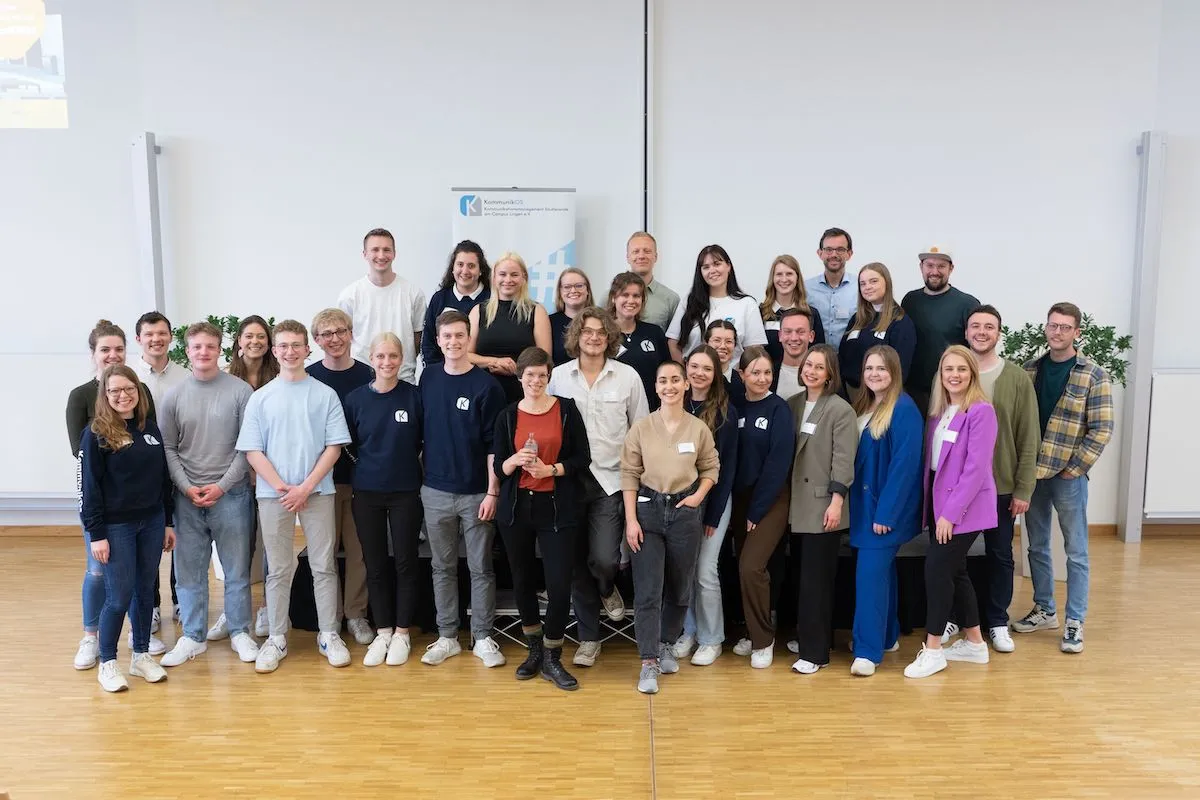
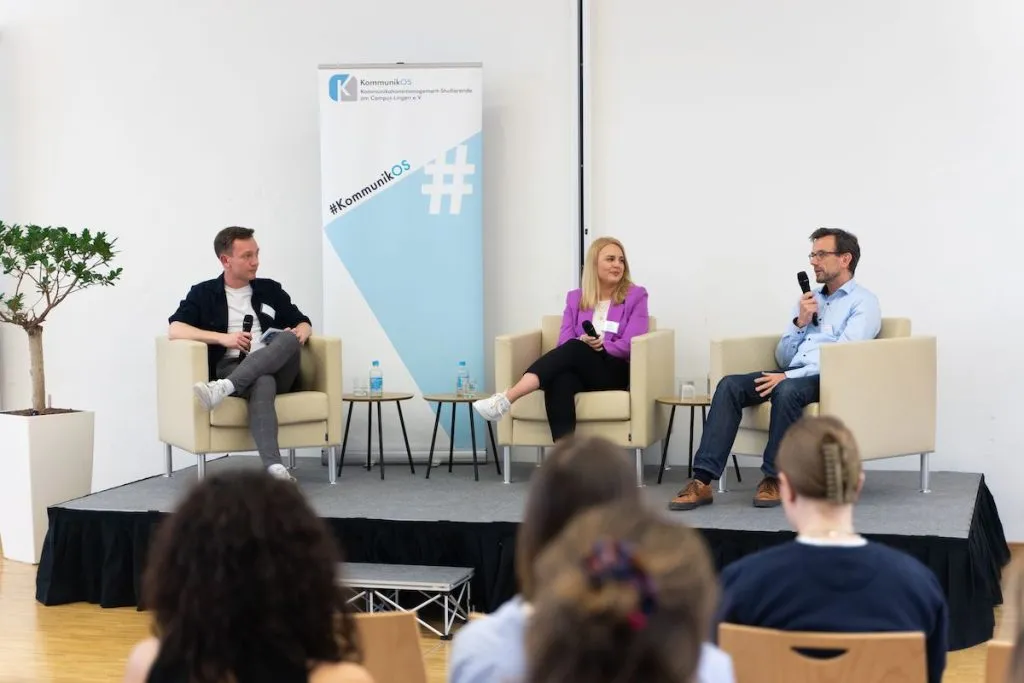
At a panel discussion concluding the KoMaktuell 2023 at Campus Lingen of Osnabrück University of Applied Sciences, it was noticeable that young communication and media scholars are also engaging intensively with ChatGPT and its effects. I summarised my practical experience for those soon-to-be entrants to the profession in three statements — in a similar way, I would also recommend that companies begin engaging with AI like this:
- First, the framework conditions must be clarified: How can usage be legally compliant and ethically sound? Which rules should apply to the use of AI?
- Once that is clarified: Gather your own experience – experiment and try out different areas of application! But: Stay critical.
- Stay relaxed and flexible: I don’t see the danger of the PR field disappearing. We will have to come to terms with AI, but the use of “human intelligence” will never become redundant.
We are happy to support you in identifying the opportunities and risks of using artificial intelligence in corporate communications. I look forward to your feedback and to continuing the discussion, for example over on LinkedIn: Tilo Timmermann.
PS: This text was written entirely without the help of ChatGPT. We strongly recommend keeping an eye on the current discussion about AI in corporate communications and beyond. And the fact that AI in WordPress attests that this text is hard to read, we hereby politely ignore.
Author: Tilo Timmermann, co-founder and Managing Director of TDUB Communications Consultancy
